- DLIM's Playbook
- Posts
- Tyreek Hill
Tyreek Hill

Devin Limerick
October 13th, 2025
Tyreek Hill’s ability to explode off the line, stop on a dime, and change direction at full speed makes him one of the most electric players in football. But those same movements — the rapid deceleration, hard cutting, and awkward landings are also what put him at risk for an ACL tear.
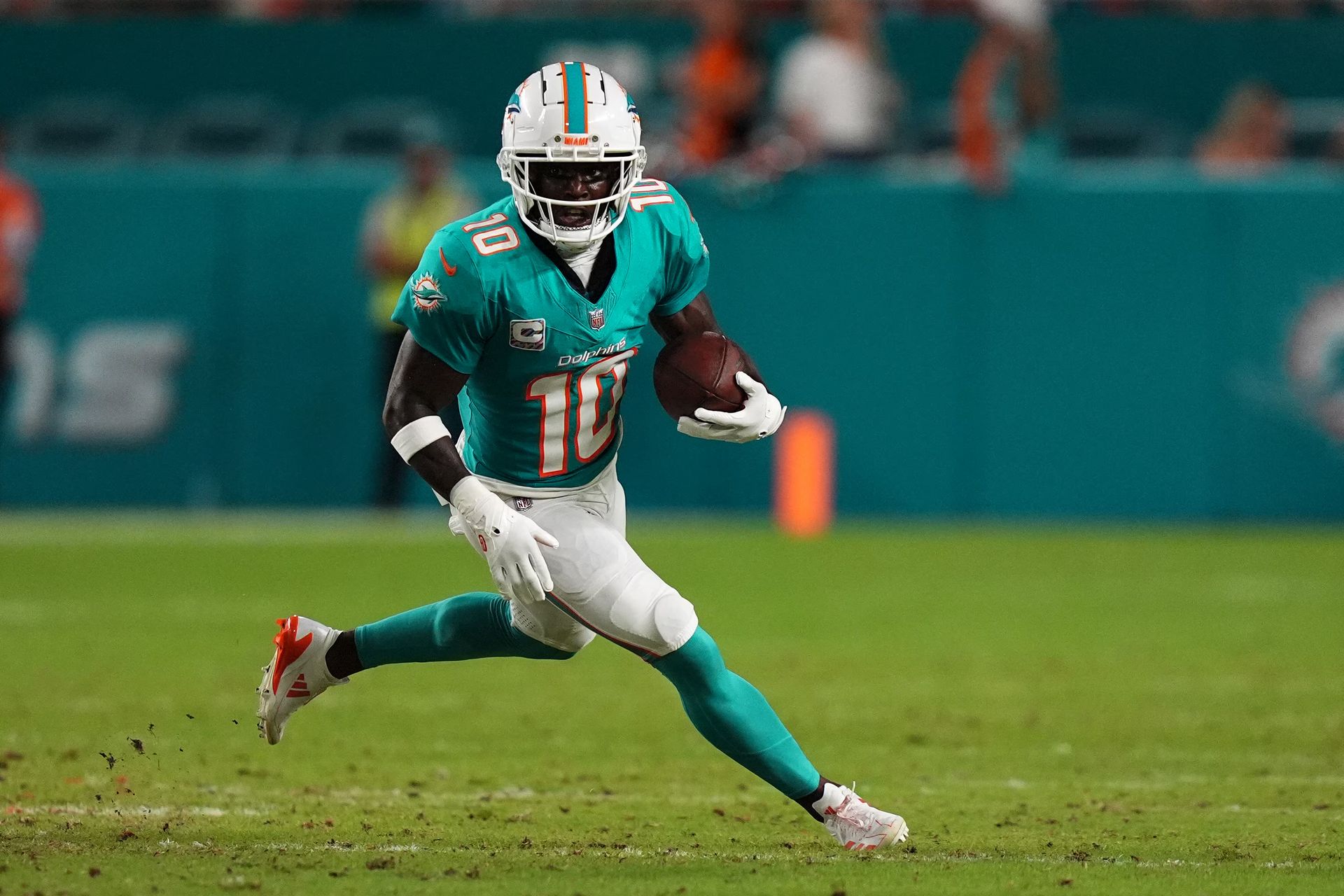
The anterior cruciate ligament, or ACL, sits in the center of the knee, connecting the femur (thigh bone) to the tibia (shin bone). Its main job is to prevent the tibia from sliding too far forward (translation) and to stabilize the knee during rotation. In football, ACL injuries usually occur during non-contact movements — think of a wide receiver sprinting full speed, planting to cut back inside, and the knee collapsing inward with the foot fixed in the turf. That inward collapse, paired with a rotated femur and the sheer force of deceleration, can cause the ACL to rupture.

Tyreek’s game is built on that exact type of movement — extreme speed followed by an equally aggressive stop or change of direction. His cuts are so sharp that he puts an enormous amount of force through his knees with each step. Even for someone as powerful and well-conditioned as Tyreek Hill, the ACL can only handle so much torque. Once it gives out, players often describe hearing or feeling a “pop,” followed by immediate swelling and a sense that their knee isn’t stable anymore.
ACL tears aren’t random — they’re often the result of underlying factors that develop over time. In football, a few key pre-disposing issues increase the risk.
One of the biggest is quad weakness ratio compared to the hamstring. The quadriceps muscle plays a huge role in stabilizing the knee, especially during deceleration and landing. When the quads are underdeveloped or fatigue sets in late in a game, the knee loses its braking control, putting more stress on the ACL. I\
Another common preceptor is hamstring weakness or a history of hamstring strain. The hamstrings act as the natural “seatbelt” of the knee, helping prevent the tibia from translating forward — the very motion the ACL is designed to control. When hamstrings are tight, fatigued, or not firing properly, the ACL ends up taking on more load than it can handle. It’s why many performance staffs now place so much emphasis on posterior chain strength — not just for speed, but for knee protection.
Even small mechanical issues, like poor hip control or weak glutes, can lead to dangerous knee angles when landing or cutting. When you add in football’s unpredictable contact, turf, and fatigue from playing at max intensity, the risk compounds.

Once the ACL is torn, surgery is often required to reconstruct the ligament using a graft. Surgeons have several options, and each has trade-offs depending on the player’s position, body type, and long-term goals.
The most traditional option is the patellar tendon graft. This involves taking a strip of the patellar tendon — which connects the kneecap to the shinbone — along with small bone plugs on each end. It’s considered the “gold standard” for strength and stability, particularly for athletes in high-demand sports. However, it can sometimes cause anterior knee pain or discomfort when kneeling, which can be an issue for positions like receivers who sprint and decelerate constantly.
Another strong choice is the quadriceps tendon graft, where a portion of the quad tendon above the kneecap is used. This option has become increasingly popular in recent years, especially for athletes with strong quadriceps and large tendon size. It tends to cause less kneeling pain than the patellar graft, and research has shown it offers comparable stability.
Then there’s the hamstring tendon graft, which uses one or two of the hamstring tendons on the back of the thigh. This approach causes less post-op pain in the front of the knee and preserves the kneecap area, but it does slightly weaken the hamstrings — not ideal for athletes who rely heavily on sprinting. For someone like Hill, whose hamstrings are critical for acceleration and top-end speed, this would be a key consideration.
Lastly, some athletes choose an allograft, which uses donor tissue from a cadaver. Allografts avoid the need to harvest a tendon from the athlete’s own body, leading to less surgical pain and faster early recovery. However, they also have a slightly higher re-tear rate in younger, high-level athletes, especially in cutting sports. For NFL players, autografts (using their own tissue) are still the preferred option for durability and performance.
The choice ultimately depends on the athlete’s build, their surgeon’s philosophy, and the unique demands of their position.
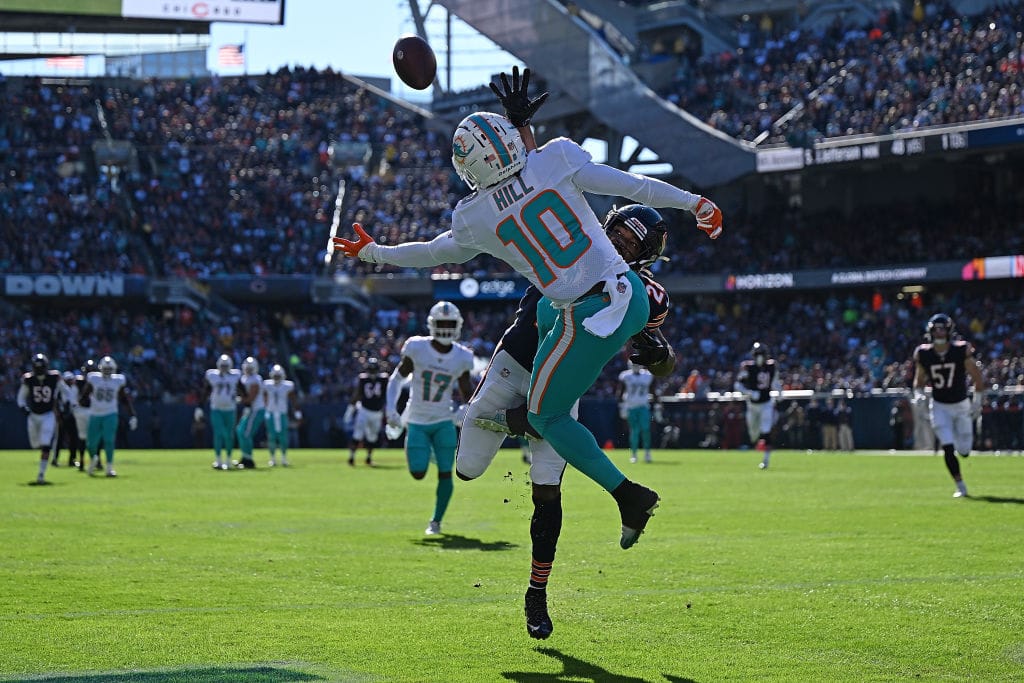
Surgery is only the beginning. The true battle starts in rehab, and for an NFL athlete, every detail of that process is monitored and optimized. The typical rehab timeline for an ACL reconstruction is around 9 to 12 months, but for high-level players, it’s less about hitting a date and more about meeting performance milestones.
In the first few weeks, the focus is on reducing swelling, restoring knee extension, and reactivating the quadriceps — which tend to shut down after surgery. Early movement and controlled weight-bearing are key to preventing stiffness and regaining neuromuscular control.
Then, the emphasis shifts to strengthening the quadriceps, hamstrings, and glutes, and improving balance and coordination. Athletes start reintroducing single-leg stability and controlled plyometrics. This phase is where the difference between average rehab and elite-level rehab becomes clear — NFL players are working daily with physical therapists, athletic trainers, and strength coaches, using technology like force plates, BFR (blood-flow restriction) training, and motion capture to ensure symmetry and control.
Next, the athlete transitions into sport-specific movements: cutting, sprinting, and decelerating under supervision. The knee is structurally healed by now, but the neuromuscular system — the brain’s communication with the muscles — still needs retraining. Regaining confidence is often just as challenging as rebuilding strength.
Return-to-play phase → once objective testing shows at least 90% symmetry between legs in strength, jump height, and agility. Even then, performance staff will gradually reintroduce full-speed drills and game situations. Tyreek Hill’s explosive playing style means he’ll need exceptional confidence in his reconstructed knee — not just to run fast, but to react instinctively and change direction without hesitation.

An ACL injury is one of the toughest setbacks an athlete can face, but it’s no longer the career-ending diagnosis it used to be. With modern surgical techniques, daily rehab access, and the relentless mindset that defines elite athletes, players like Tyreek Hill often come back just as fast — and sometimes even stronger. The process demands patience, consistency, and trust, both in the medical team and in the body’s ability to adapt.