- DLIM's Playbook
- Posts
- Phases of Rehab - Plyometric
Phases of Rehab - Plyometric
Written for PT students, early-career clinicians, and performance coaches pursuing football.

Devin Limerick
March 23rd, 2026
Good Morning! Happy Monday. I hope your bracket isn’t already busted. But usually at this point, it doesn’t look good for me.
As we continue through spring ball, I wanted to go over the next phase of rehab, the plyometric phase.
*The injuries discussed in this newsletter are for general educational purposes only. I am not affiliated with the athlete’s medical team, and the information shared does not reflect any insider or team medical details. Specifics about the injury are often unavailable, which can significantly influence the estimated timeline for return to play.
Plyometrics
Plyometrics are high intensity, explosive exercises that are designed to increase speed, strength and power. All things required by football. Which is why, development in this phase is very important to safely get the athlete back on the field.
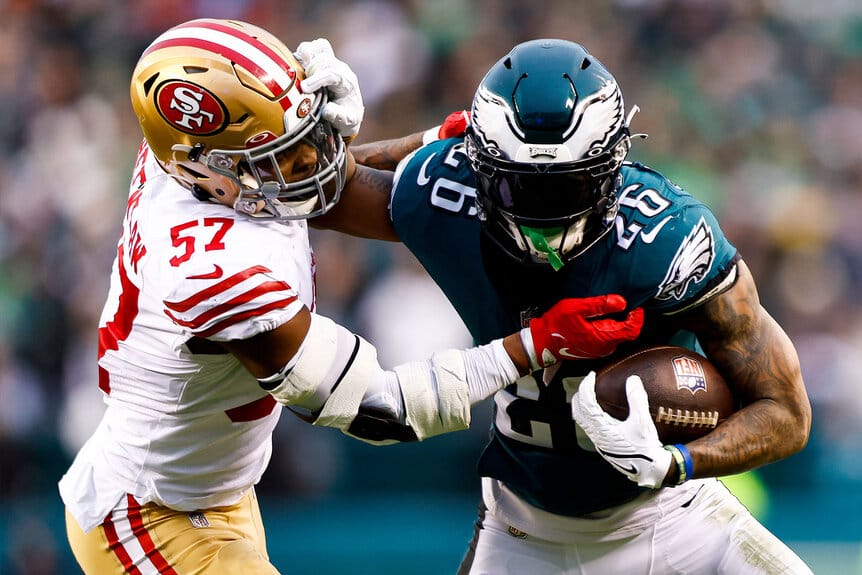
Skill Development
In the Plyometric phase, this is where skill development is key. We are mimicking sport specific movement in rehab for the body to be familiarized with this. Therefore, in this phase, introducing sprinting and plyometric mechanics is key.
These exercises will include high force and max effort to replicate the sport. The great component about this phase, is many of the exercises we are currently doing from the previous phase, can be include, with a change in sets, reps, and intensity.
The sets and reps will decrease and the intensity will increase. Rest time in between sets will also increase to ensure full recover to allow for fast and explosive movements.
If we were to look at exercises for specific injuries, hamstring strain for example, would include wall drills in the beginning of the phase and moving towards acceleration runs, tapping into top end speed. There was a study that showed athletes do not hit top end speed before 15 yards which lowers the stress on the hamstring.
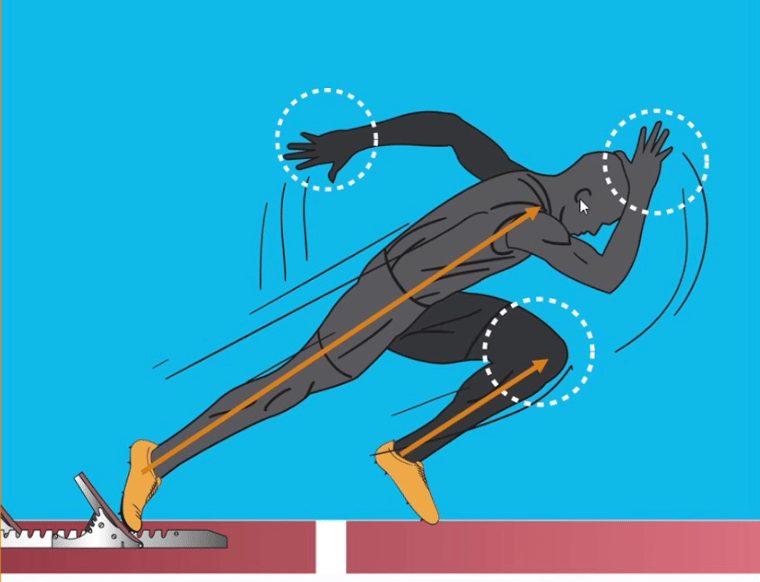
Look at the picture above, the athlete has the left leg flexed at the hip and flexed at the knee. On the right leg, the athlete is extended at the hip and extended at the knee. This puts the hamstring in a safer position because it is not put on stretch at both joints (a passive insufficient position) while trying to generate force into the ground (a common place where hamstring strains occur).
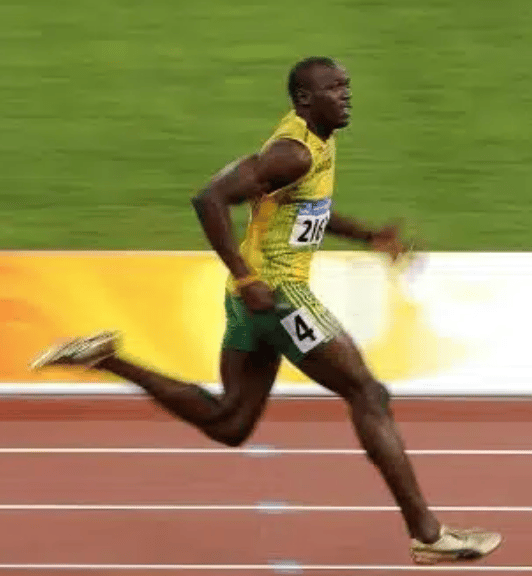
However, if we look at the photo above with the athlete is at top end speed. The athlete is flexed at the hip and going into extension at the knee putting max tension on the hamstring increasing stress on the muscle. This is why we have to progress to this style of running.

For a different injury example in this phase, lets say, patellar tendonitis, progressing to deceleration is key because this is when the most stress is put on the tendon because eccentric exercise within plyometrics put the most stress on a tendon.
In deceleration, the quadricep muscle is eccentrically contracting (fast) to slow down the body to a stop. Since the patellar tendon is the tendon that connects the quadricep to the tibia via the patella and quadricep tendon, this tendon is stressed significantly. Progressing to decelerations would include starting with an exercise like depth drops.

*Due to my professional association with the Atlanta Falcons during preseason and my current role with the Florida State Seminoles, I will not provide educational content or commentary on any injuries within these programs during or after the season.

WADTHAD “What a day to have a day.” Founded by Billy McCaffrey and Vin Franco, WADTHAD was built on a simple vision: make the most of every opportunity and celebrate whatever the day brings. Our hope is that you’ll create better days for yourself and those around you and wear our gear as a daily reminder that every day has greatness in it.
Testing
Testing becomes more valuable in this phase. We are seeing if the muscles can, not only withstand these fast explosive movements but also have the strength and endurance to perform these contractions. Test can range from assessing the performance of the exercises throughout rehab to force frame and force deck metrics.

Stress on Muscles
In the plyometric phase, stressing muscles in the primary phase and secondary phase is important. This will allow strengthening of the injured tissue and the tissue around it. This will also introduce sport movement again to the whole body instead of just the injured tissue. Additionally, towards the end of this phase, introducing multiplanar movements is key. Meaning, exercises that require the body to move in multiple planes at the same time. This is introduced because many movements in sport requires movements in more than one plane, like catching a back shoulder ball.
Rehab will still include strengthening the muscle outside of neutral position at end ranges. However, towards the end of this phase, adding in exercises that include end range of motion rate of force development can be a big piece in getting the athlete to return to play criteria. Rate of force development is the speed at which a muscle can increase force (change in force/ change in time). Rate of force development is crucial for explosive movements, and doing them at end range can prepare the tissue to withstand future potential injuries by familiarizing the tissue with this environment in a more controlled setting.
The next phase, which will be covered next week is the return to play phase!