- DLIM's Playbook
- Posts
- OFF SEASON - RB
OFF SEASON - RB

Devin Limerick
December 22nd, 2025
Good Morning! Happy Monday! We started this past weekend off with a great game, Alabama against Oklahoma. Bama, going down 17-0 then scoring 24 unanswered! We should’ve known they were going to come back and win, Alabama has never lost to the same team twice in one season. Then we move down to division III semifinals where unfortunately John Carroll season has came to an end. But, has definitely made its mark as one of the best seasons in Carroll history with being Conference Champions, beating Mount Union in the playoffs, and taking down 4 top 25 teams. Currently being led by some of my former teammates Joe Torok and Tyler Hughes, I couldn’t be more proud of them. Then of course, we had our group of 5 match offs against the best teams in the power 4.
With more and more teams jumping into the off season, lets talk about some specifics we would want to see running backs training.
*The injuries discussed in this newsletter are for general educational purposes only. I am not affiliated with the athlete’s medical team, and the information shared does not reflect any insider or team medical details. Specifics about the injury are often unavailable, which can significantly influence the estimated timeline for return to play.
One aspect of the off season I want to put a huge emphasis on is a BREAK. Right after the season, post season, this is time for athletes to rest and heal from the season. The research shows that taking this break will result in greater off season gains than jumping straight into lifts and training. Additionally, it significantly reduces the percentage of off season injuries. This break can be anywhere from 2-4 weeks and can include complete rest, or other physical activities such as yoga or pilates. Some type of physical activity that is not football related.

There are many buckets we could fill for running backs in the off season. As a running back, you have to block linebackers and defensive lineman, often much bigger. They have to tote the rock in a strong and powerful way as well as in open space to make guys miss. The blend of assignments on the field is why there are so many buckets for RB’s which include:
Single Leg Power
Hip Strength
Pelvic control and Mobility
Shoulder Strength
Rotational Mobility/Strength/Power
Ankle inversion/Eversion
No stretch plyometrics
Lateral Power
Bosch Drills
Vertical Hip Displacement
I’m sure there are many more buckets but this is the list that we have thought of to work on in the off season. And depending on how your running backs are used in the offense, or their specific skill sets, you can focus more on certain buckets over the others.
But for today, I’m going to grab just a few of these to talk about.
Lateral Power
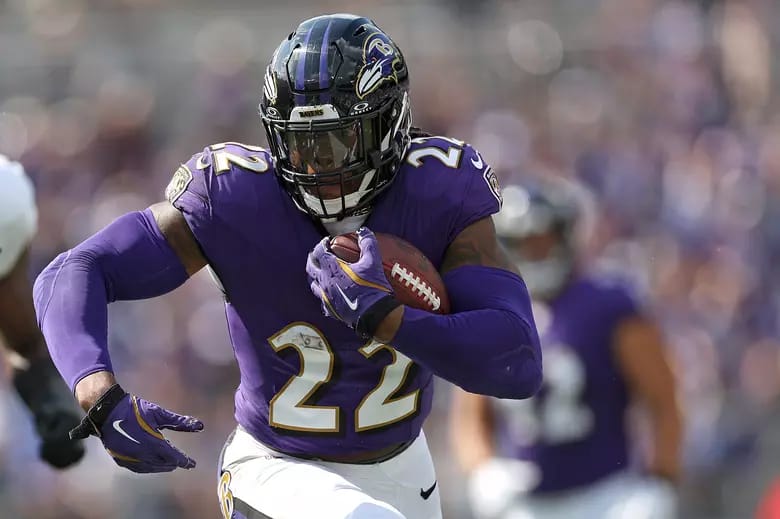
Lateral power is extremely important to train in the off season for running backs. With the amount of bursting out of cuts and fast acceleration they need to perform on the field. This is a lot of training in the frontal plane which includes the abductors and adductors of the hip, as well as everters and inverters of the ankle. But first, it is important that the sagittal plane muscles, hamstrings and quadriceps for example, are well trained. Sagittal plane is KING, and with great development here, the frontal plane muscles will have better success. Therefore, starting in the sagittal plane early in the off season, than transitioning heavier into frontal plane could be a good plan for off season training in these players. Some exercises to include for lateral power are skater hops, lateral box jumps, fast shuffling, and single leg lateral medball drops.
No Stretch Plyometrics
Next, an important bucket to capture is no stretch plyometrics. We’ve talked about this bucket with offensive and defensive lineman but this is even more important for running backs. Especially if their coaches don’t want “false steps” which has brought a lot of controversy over the years. This is because there is a lot of confusion between false steps and plyo steps. Plyo steps are fast steps staying within your center of mass to get to where you are going faster, while false steps is taking a step outside of your center of mass and changing where your center of mass is to get to where your going ultimately slowing you down. Research has shown that plyo steps allow you to get to where you are going faster than not taking one.
However, if coach wants no plyo steps, then we have to make them right by training no stretch plyometrics during the off season. This is trained by coming out of an already paused and loaded position such as a box squat or a bench press with a pause.

*Due to my professional association with the Atlanta Falcons during preseason and my current role with the Florida State Seminoles, I will not provide educational content or commentary on any injuries within these programs during or after the season.
Ankle Inversion/Eversion
The ankle inverters and everters are important to train because one, it will help with lateral power, but also because it is a great step towards injury prevention. Ankle sprains are one of the most common injuries in football, especially for running backs. Some exercises we can do for these muscle groups include agility ladder, banded ankle, lateral pogos, and heel elevated with inversion bias putting more pressure into the first metatarsal.
Vertical Hip Displacement
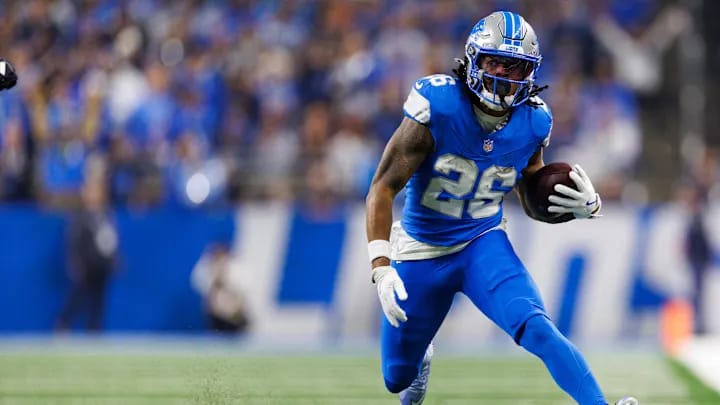
Vertical hip displacement refers to the controlled lowering and rising of the hips as a running back decelerates, cuts, absorbs contact, and reaccelerates, and it plays a major role in how efficiently force is managed through the lower body. For running backs, the ability to smoothly drop the hips allows them to sink into cuts, keep their center of mass stacked over the foot, and stay balanced through contact, while the ability to rapidly re-extend the hips drives explosiveness and speed. Poor control of vertical hip displacement often leads to excessive knee collapse, forward trunk lean, or delayed acceleration, increasing energy loss and stress on the ankles and knees. Training this quality focuses on teaching the hips to accept load eccentrically and express force quickly, using exercises such as tempo split squats or rear-foot elevated split squats for controlled hip lowering, total kneeling with knee drives with an isometric plate overhead hold, drop lunges or step-downs for single-leg force absorption, and banded triple extensions on the wall.