- DLIM's Playbook
- Posts
- OFF SEASON - OL
OFF SEASON - OL

Devin Limerick
December 15th, 2025
Good Morning! And of course, Happy Monday! This weekend was filled with great football (Army-Navy Game, John Carroll beating Berry College in division III playoffs) and not so good football (the Cleveland Browns… again) But for all of these teams, the off season is approaching fast. And to carry on from last weeks post on off season training for Defensive Lineman, today I will talk about off season training for offensive lineman!
*The injuries discussed in this newsletter are for general educational purposes only. I am not affiliated with the athlete’s medical team, and the information shared does not reflect any insider or team medical details. Specifics about the injury are often unavailable, which can significantly influence the estimated timeline for return to play.
Before I dive into the details of the off season program, I want to recognize one of the greatest offensive lineman of all time. Yes, he played for the Cleveland Browns, Joe Thomas.
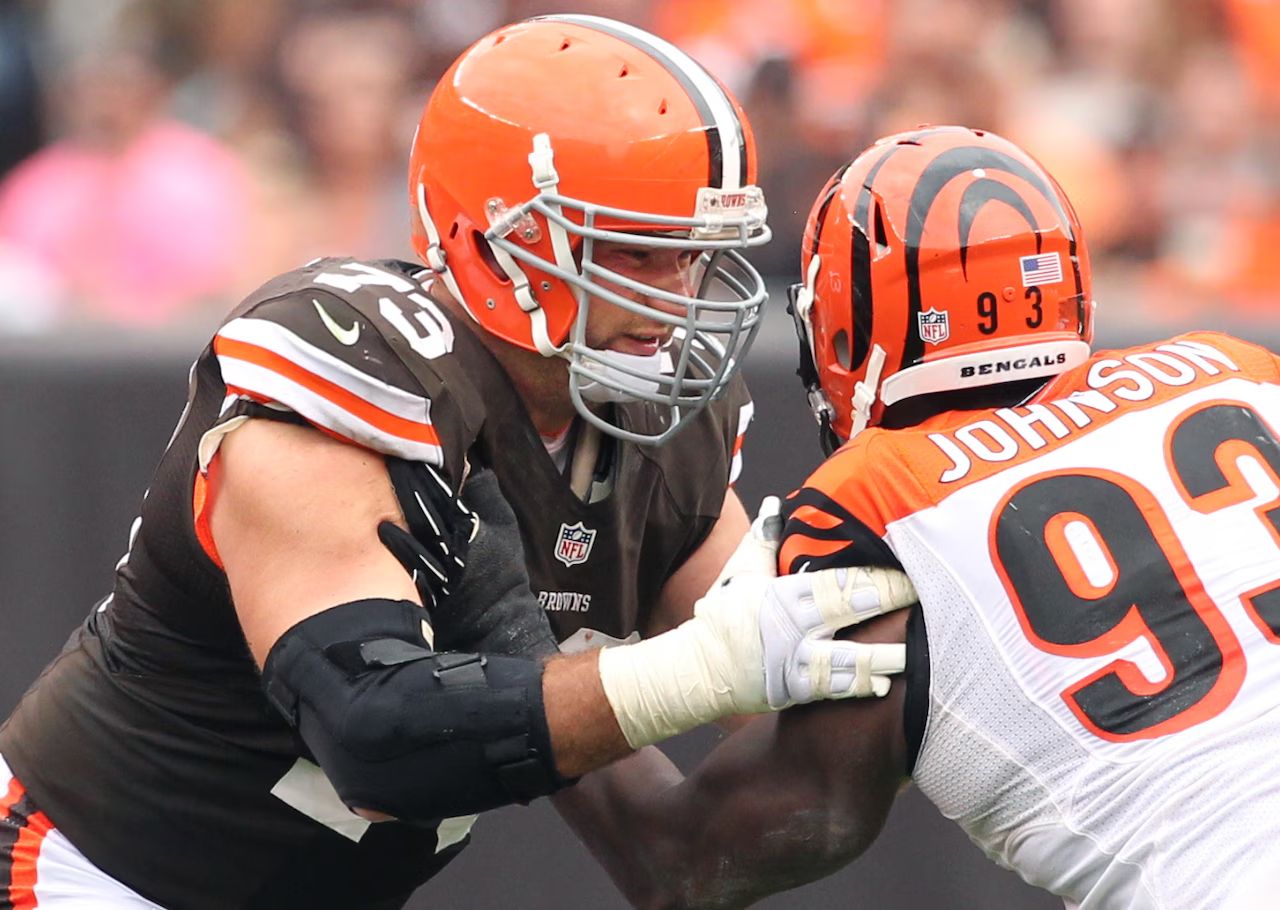
Joe Thomas played for 11 seasons with the Cleveland Browns. One of the toughest offensive lineman to play the game, playing 167 consecutive games (over 10.6k consecutive snaps) until a triceps injury in his final season.
At left tackle, arguably one of the most important positions on the field, Thomas played with incredible technique and consistency. He only allowed 30 sacks out of 6,680 pass blocking snaps. He was a 10 time pro bowler, making him the only offensive lineman with ten straight pro bowls to start a career.
The off season training for an offensive lineman will look very similar to one for a defensive lineman. This will include buckets such as:
Disassociation of the scapula and pelvis
Pelvic mobility and control
Thoracic Spine rotation/mobility/strength/power
Anti lateral flexion and rotation
Neck
Shoulder Strength
Scapular function/mobility/control
Ankle Eversion/Inversion
Knee
Hip Adduction
Hand/Grip/Wrist
No stretch plyometrics
Bosch Drills
I won’t cover all of these, especially not the ones I covered last week, but I will cover a few key buckets we will need to fill this off season.
Disassociation of scapula and pelvis
For an offensive lineman, disassociation of scapula and pelvis is the ability to move and stabilize the shoulder girdle independently from the hips so force can be transferred efficiently through the trunk during pass sets, striking, and absorbing contact. In the offseason this matters because many big bodies move as one rigid block, leaking power and stressing the low back and shoulders. Training this means teaching the pelvis to stay stable while the scapula moves (and vice versa), improving trunk stiffness, hand speed, and balance under load. Effective exercises include half kneeling palloff press, split-stance single-arm rows or landmine press, dead bug with banded reach (posterior pelvic tilt while the scapula moves), and bear crawls with controlled scapular motion to reinforce punch mechanics without hip over-rotation.
Are you interested in learning more about off season training for athletes, injury prevention, and more? Quick the link below and type in “course” and I’ll add you to the waitlist for my course coming out next year!
Pelvic Mobility and Control
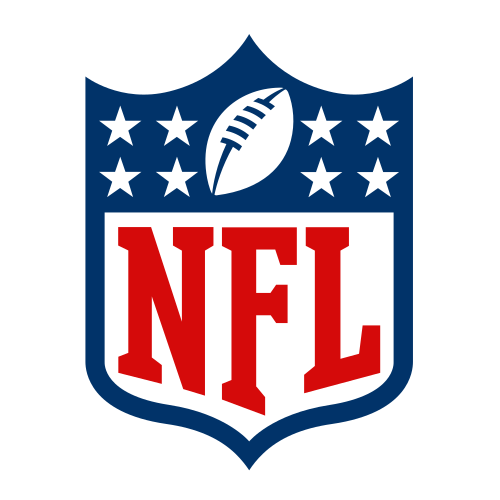
Pelvic mobility and control is the ability to access hip motion (flexion, extension, rotation, adduction, and abduction) while maintaining trunk stiffness so power can be produced and absorbed without energy leaks during drive blocks, re-anchoring, and lateral movement. In the offseason, this is critical because limited or uncontrolled pelvic motion often shows up as overuse of the lumbar spine or slow, inefficient footwork. Training should emphasize owning range of motion and controlling the pelvis under load and speed. Key exercises include 90/90 hip switches with controlled torso, hip airplanes for rotational control, split-squat isometric holds with level pelvis, band-resisted lateral walks with posterior pelvic tilt, single-leg RDLs focusing on hip hinge not spinal motion, dead bugs and bridges with marching, and sled marches or drags to integrate pelvic control into football-specific movement.
*Due to my professional association with the Atlanta Falcons during preseason and my current role with the Florida State Seminoles, I will not provide educational content or commentary on any injuries within these programs during or after the season.
Knee
Knee injuries are very common in offensive lineman. So common that many collegiate teams require all of their offensive lineman to wear knee braces for practice and games. Of course this requires strengthening of the muscles that act on the knee (quads, hamstrings, gastrocnemius) but the hip musculature as well to take stress off the knee. Some exercises would include isometric wall sits, Spanish squats, step-downs and step-ups, split squats, single-leg squats, and pogo hops to build strength, control, and tendon capacity.
BOSCH Drills
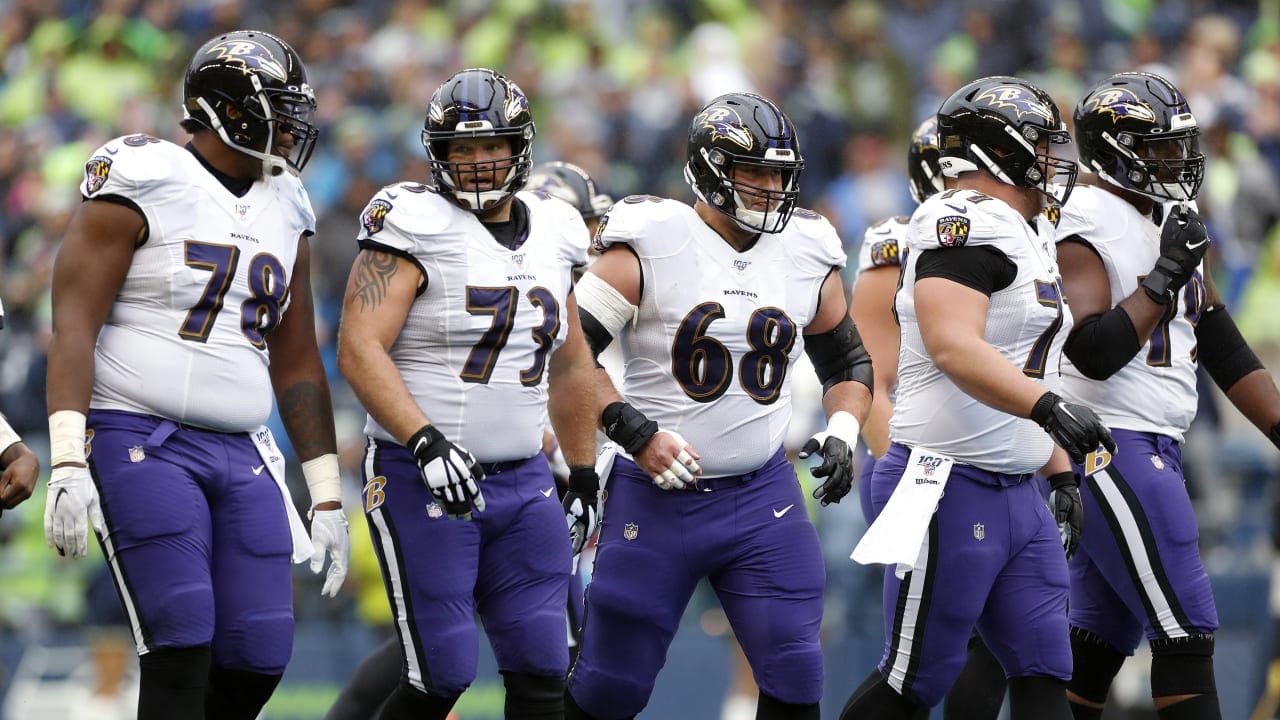
BOSCH drills (Building Optimal Strength through Core Hinges) focus on training the trunk and hips to transmit force while the limbs move, reinforcing the “block” strength needed for contact without sacrificing control. They’re used to clean up energy leaks between the upper and lower body and build resilient, repeatable movement patterns. These drills emphasize contralateral loading, slow tempos, and positional integrity. Examples include Single Arm farmers walks to challenge lateral and anti-rotation control, single-arm lifts and chops, hinge-to-row patterns with asymmetrical load, marching patterns with banded resistance, split-stance presses and rows, and crawl variations with deliberate pauses, all reinforcing force transfer from the ground through the core into the hands.