- DLIM's Playbook
- Posts
- Lamar Jackson
Lamar Jackson

Devin Limerick
October 6th, 2025
In week 4 against the Chiefs, Lamar Jackson went down with a hamstring strain. His status is week to week and he did not play this past weekend. Today I will talk about hamstring injuries, and his specifically!

Hamstring injuries are among the most common soft tissue issues in football, especially for skill players like Lamar Jackson. The hamstrings are a group of three muscles located on the back of the thigh: the biceps femoris, semitendinosus, and semimembranosus. Together, they act to flex the knee and extend the hip, which is vital for sprinting, cutting, and decelerating. Hamstring strains occur when these muscles are stretched beyond their capacity, often during high-speed running or sudden acceleration. For NFL quarterbacks who rely heavily on their legs, like Lamar, the mechanism is usually during terminal swing phase of sprinting. This is when the leg extends forward and the hamstrings work eccentrically to slow it down. In that split second, the muscle-tendon unit can’t handle the load, leading to microtears in the fibers. With the way Lamar plants, cuts, and escapes the pocket, that rapid deceleration and change of direction put immense stress on the posterior chain, making this kind of injury almost inevitable.
Unlike the average person dealing with a hamstring strain, Lamar has access to a full medical and performance team every day of the week. NFL players aren’t limited to two or three rehab sessions a week — they have acess to elite athletic trainers, physical therapists, and strength coaches. That constant attention accelerates the recovery process significantly. In a typical outpatient physical therapy setting, someone might receive care for 45–60 minutes, two or three times per week. But in the NFL, rehab becomes a full-time job. Lamar’s day likely includes multiple sessions: morning manual therapy to manage tissue quality and swelling, midday strength or mobility work, and evening recovery techniques like cold plunges, NormaTec compression, or light pool running. The intensity and frequency of intervention allow his tissue to remodel faster, his neuromuscular control to return sooner, and his overall conditioning to stay higher than a typical patient recovering from the same injury.
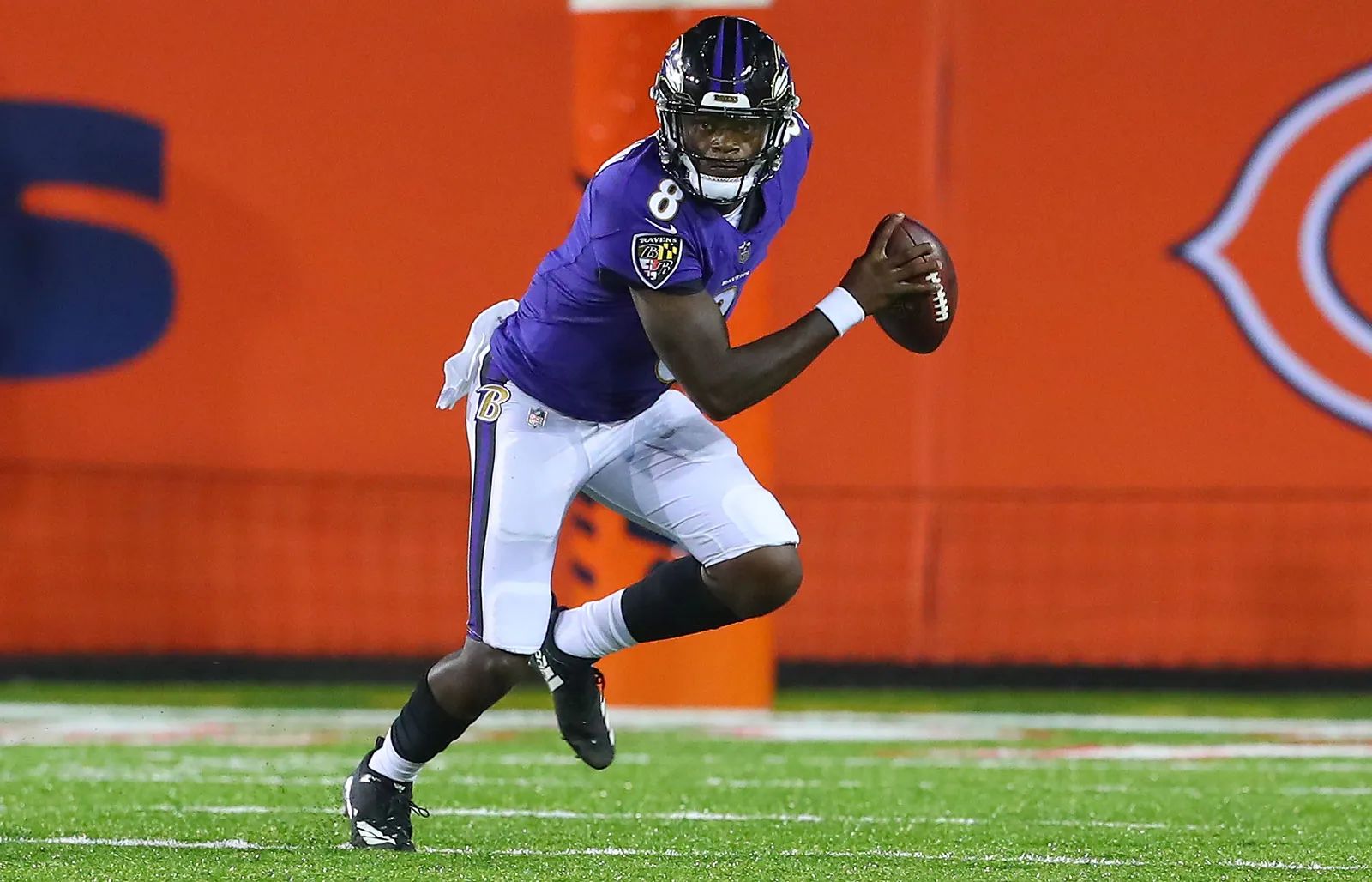
It’s also important to acknowledge that genetics play a major role in how elite athletes recover. NFL players like Lamar Jackson are not just skilled — their physiology is fundamentally different from the general population. Muscle fiber composition, tendon stiffness, collagen density, and hormonal profiles all contribute to how efficiently the body responds to stress and heals from injury. Fast-twitch dominant athletes like Lamar possess greater power output but also tend to have higher neuromuscular efficiency — meaning their brain and muscles “communicate” with speed and precision. That same efficiency often allows their bodies to re-establish movement patterns and coordination faster after injury. With a focus on optimized sleep and nutrition, you get a recovery curve that’s not like the average weekend warrior.
During the acute phase of rehabilitation, the primary goals are to reduce pain, protect the healing tissue, and restore gentle range of motion (ROM). For someone like Lamar, this starts almost immediately after the injury. Modalities like soft tissue work, nerve glding, and blood flow restriction (BFR) can be used to maintain circulation and stimulate healing without overloading the tissue. NFL training facilities often incorporate Hydroworx underwater treadmills, which allow athletes to start running motions in a reduced weight-bearing environment. The buoyancy offloads the hamstring but still lets the athlete work through gait mechanics, cardiovascular training, and even agility movements with less strain. This not only maintains fitness but prevents compensations that often develop when the athlete is sidelined too long.

As pain decreases and ROM improves, focus shifts toward progressive agility and trunk stabilization (PATS). Core and pelvic control are essential because the hamstrings attach to the pelvis — any instability there can increase tension through the hamstring during movement. Exercises like dead bugs, pallof presses, and side planks teach the athlete to stabilize the trunk while the limbs move. From there, the progression includes controlled agility work: gentle lateral shuffles, skips, and then reactive drills to retrain neuromuscular timing. For someone as dynamic as Lamar, this stage also involves reintroducing cutting mechanics and sprint drills with load monitoring to ensure symmetry between the injured and uninjured limbs.
The strengthening reconditioning phase typically transitions from eccentric loading to concentric power. Eccentric exercises focus on controlling lengthening under tension — the exact demand that usually causes hamstring injuries. Bridge slides, Romanian deadlifts, and powerball leg curls are staples here, as they teach the tissue to tolerate high tension while lengthening. Once the athlete demonstrates good control and minimal soreness, concentric and plyometric work begin. This includes things like kettlebell swings, resisted sprints, and bounding. These restore explosive hip extension and prepare the muscle for the quick stretch-shortening cycles. Throughout this process, the medical staff constantly reassess tissue quality, pain response, and strength ratios to ensure progress without setbacks.
When progressing to return to play, objective metrics become critical. Therapists and sports scientists use isokinetic or handheld dynamometer testing to calculate the Limb Symmetry Index (LSI) — comparing the strength of the injured leg to the healthy one. The gold standard before returning to full competition is achieving at least 90% strength symmetry in the hamstrings. But recovery isn’t just about the hamstring alone. Balance of the surrounding musculature matters, too. Clinicians also look at hip adduction-to-abduction ratios, ideally approaching a 1:1 balance, to ensure the athlete’s pelvis and trunk are stable under high speed demands. This prevents overreliance on one muscle group and reduces reinjury risk. Once those benchmarks are met, and drills on the field replicate real game situatiosn, a player like Lamar can begin practicing at full speed — first in controlled settings, then with defensive pressure, and finally in live gameplay.

For Lamar Jackson, the recovery timeline will depend on the severity of the strain, but with daily care, elite genetics, and technology, he has a 2-3 week time window for return with hopefully no setbacks. His return won’t just be about healing the muscle; it’s about re-establishing the confidence to explode, cut, and accelerate without hesitation. The same movements that make him one of the best QBs in football.