- DLIM's Playbook
- Posts
- Brock Bowers - PCL
Brock Bowers - PCL

Devin Limerick
December 1st, 2025
Good morning! I hope your Thanksgiving weekend was well and you’re still full. This past weekend we had a great weekend of rivalry college football leading us into bowl season. But it is sad to see the season coming to an end. Today, I will be talking about the PCL and how it sidelined Brock Bower’s for three games.
*The injuries discussed in this newsletter are for general educational purposes only. I am not affiliated with the athlete’s medical team, and the information shared does not reflect any insider or team medical details. Specifics about the injury are often unavailable, which can significantly influence the estimated timeline for return to play.
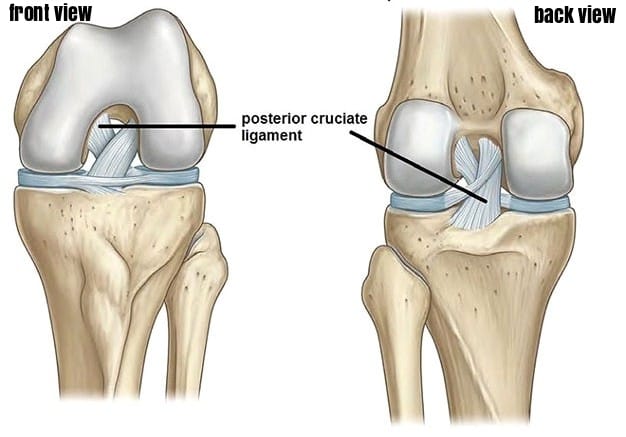
The posterior cruciate ligament sits deep within the knee joint, running from the back of the tibia to the inside of the femur. Its main role is to prevent the tibia from shifting backward and to provide stability during deceleration, cutting, and directional changes. While the ACL tends to get more attention, the PCL does a significant amount of work to manage the forces athletes put through the knee which is why its a much thicker ligament.
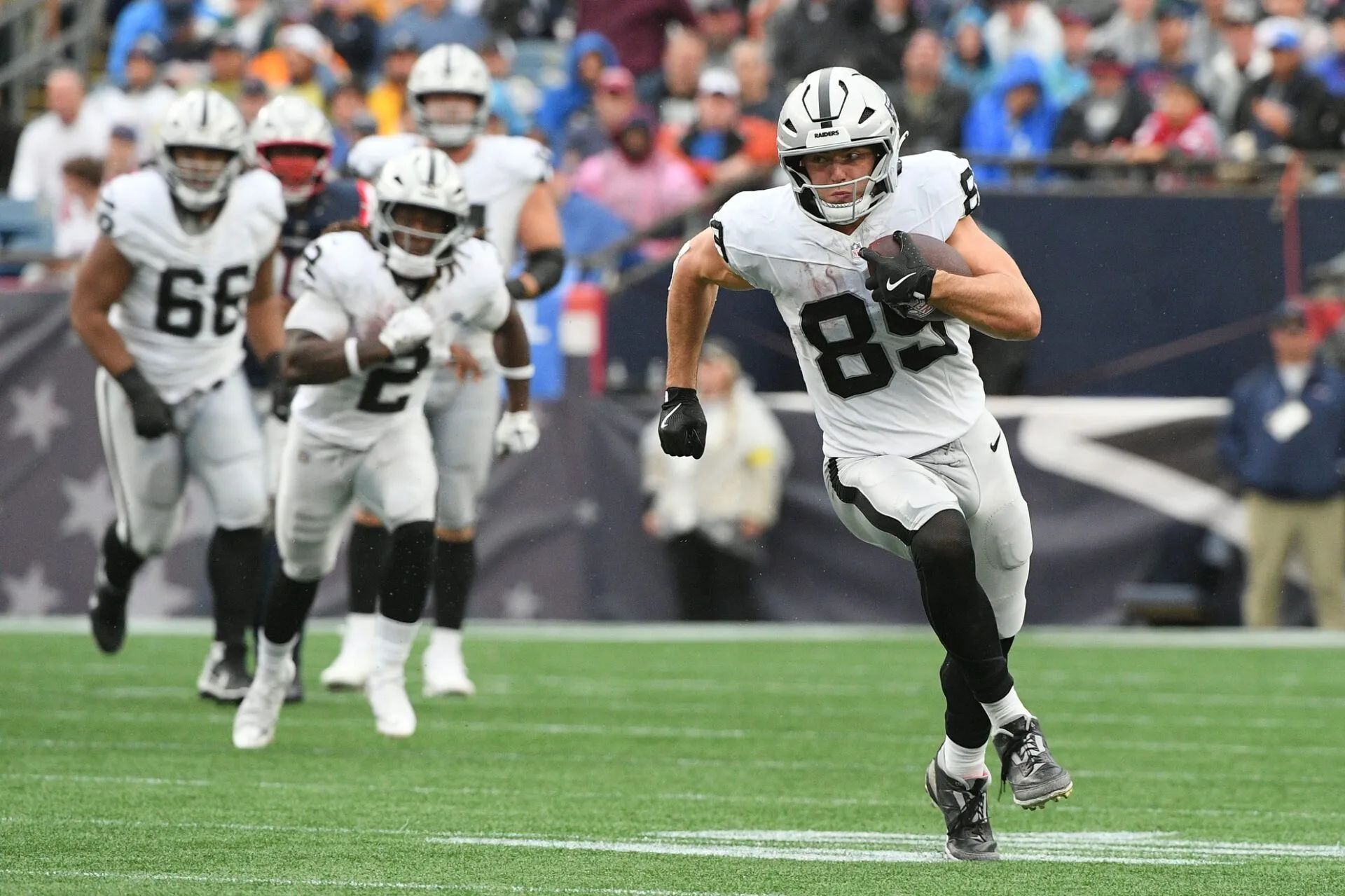
In football, the PCL is usually injured through a direct force to the front of the shin while the knee is bent causing the tibia to glide posteriorly, putting stress on the PCL. This often happens when a player is tackled from the front, lands on a flexed knee, or has another player fall into their lower leg. Outside of football, this often happens in a car accident when a patients knee hits the dashboard. The sudden backward push on the tibia overloads the ligament. This type of mechanism aligns with what we saw in Brock Bowers’ injury, contact combined with a vulnerable knee position at game speed.
Rehabilitation for a PCL injury progresses through several phases, which I’ve covered in past newsletters. The initial phase centers on controlling inflammation, restoring comfortable motion, and reducing the posterior stress placed on the ligament. This is where interventions such as gentle heel slides, quad sets, and straight-leg raises come into play, all aimed at activating the quadriceps without allowing the tibia to translate backward. As pain and swelling decrease and motion improves, the focus shifts into the hypertrophy phase. Here, the goal is to rebuild quadriceps strength and regain muscular control strong enough to counteract the backwards pull on the tibia. Exercises like leg presses restricted to safe ranges, step-ups, split squats, resisted terminal knee extensions, and early single-leg strength work become important, with an emphasis on slow, controlled tempo to reinforce joint stability.

Once adequate strength and control are restored, the athlete transitions into the plyometric phase, where the knee relearns how to manage rapid loading, deceleration, and directional changes. This stage includes movements such as small-amplitude pogo jumps, controlled box drops with a soft landing focus, low-volume bounding, and gradual progression into multi-directional hops. These drills help retrain the neuromuscular system to absorb force without excessive posterior tibial motion. As the athlete becomes more comfortable and force-tolerant, rehab evolves into the return-to-play phase. This is where football-specific movement begins to re-enter the program: position-specific cuts, high-speed acceleration and deceleration, route-running patterns, lateral shuffles into sprint transitions, and non-contact practice scenarios that mimic the rhythm and timing of actual play. Additionally, return to sport testing is often included in this stage looking at comparisons of muscle strength all around the knee and hip.
*Due to my professional association with the Atlanta Falcons during preseason and my current role with the Florida State Seminoles, I will not provide educational content or commentary on any injuries within these programs during or after the season.

WADTHAD “What a day to have a day.” Founded by Billy McCaffrey and Vin Franco, WADTHAD was built on a simple vision: make the most of every opportunity and celebrate whatever the day brings. Our hope is that you’ll create better days for yourself and those around you and wear our gear as a daily reminder that every day has greatness in it.
The final phase, return to performance, focuses on refining the qualities that separate being “cleared” from being back at the level they were prior to the injury. This stage targets top-end speed, reactive agility, and the ability to produce and absorb force at full intensity. Athletes work toward explosive single-leg jumps, high-velocity deceleration drills, reactive cutting based on visual cues, and conditioning that mirrors the demands of their position. The intention is to restore confidence, efficiency, and on-field decision-making so the athlete not only returns to participation but to the same level of performance they had before the injury—or ideally, even better.

Some athletes do play through partial PCL injuries, often with the support of a brace to limit backward tibial movement. This is feasible when swelling is controlled, quadriceps strength is high, and the knee remains stable under load. Still, it requires careful monitoring, as the demands of football place significant stress on the ligament. Brock Bowers’ case highlights that with targeted rehab and strong baseline strength, players can return effectively—but the progression matters if the goal is long-term performance, not just short-term availability.